
The situation
Medifab manufactures high-specification wheelchairs and assistive devices for people with disabilities and serious injuries. The work is precise, the products are purpose-built, and the intellectual property behind them represents years of engineering development. Security here sits at the meeting point of health and safety obligations on the factory floor, protection of proprietary design and manufacturing process, and the operational continuity a growing order book demands.
Before engaging Blue Eagle, Medifab ran a mix of systems across its 6 locations with no standardisation and no access control. Managing security meant managing inconsistency: different platforms, different interfaces, and no single view of who was where.
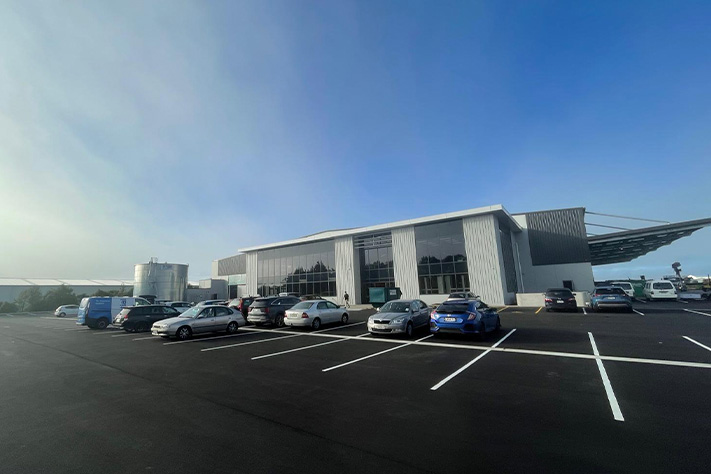
The trigger was not an incident. It was a new building, and with it the prospect of doubling operational capacity. Medifab’s management take the health and safety of their people seriously and wanted every practical safeguard designed in from the start, with compliance secured well into the future. They knew they had one opportunity to get it right. They were not shopping on price. They were looking for capability, ease of use, and a system that would grow with the business.
The approach
Blue Eagle’s engagement started before a single product was specified.
The Blue Eagle team spent a full day at Medifab’s existing facility before any recommendation was made: how staff and contractors move across the floor, which zones require strict separation, the workflows a security system would either support or obstruct, and the compliance obligations the business carries. That day produced a written read of Medifab’s current state and the gaps between it and what a compliant, operationally sound environment requires. No recommendations were made at that stage. The assessment was Medifab’s to keep.
The design conversation then ran on options, not a single quote. For access control, Blue Eagle evaluated ICT Protege GX and Inner Range, and added Ubiquiti UniFi at Medifab’s request because it runs on their existing Ubiquiti network infrastructure. For CCTV, the comparison covered NX Witness, Milestone, and Ubiquiti UniFi. For the alarm, Ajax was weighed against the alarm capability built into the Inner Range and ICT platforms. Each option carried stated trade-offs and was tested against where the business is going, not just where it is today. Medifab chose Ubiquiti UniFi for access control and CCTV, and Ajax for the alarm.
The distinction Medifab registered was not technical. It was the difference between a vendor presenting a quote and an advisor presenting options with an honest view of the trade-offs.
The delivery
CCTV: 86 cameras, intelligence live at commissioning. Every camera is AI-enabled. From day one the system runs intrusion detection, line-crossing detection, and classification of vehicles and people by object type and colour, distinguishing staff, contractors, and unauthorised individuals at entry. This is not roadmap capability. It was operating the day the system was commissioned. Smoke and flame detection is ready to switch on in software on the same cameras when Medifab wants it: no new hardware, a configuration change rather than a capital project.
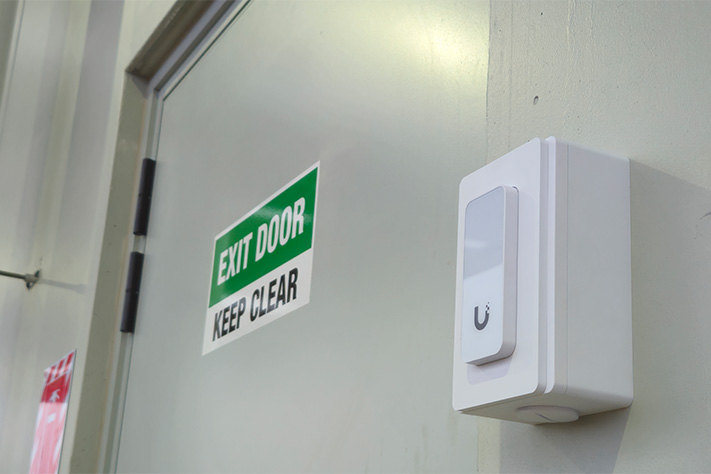
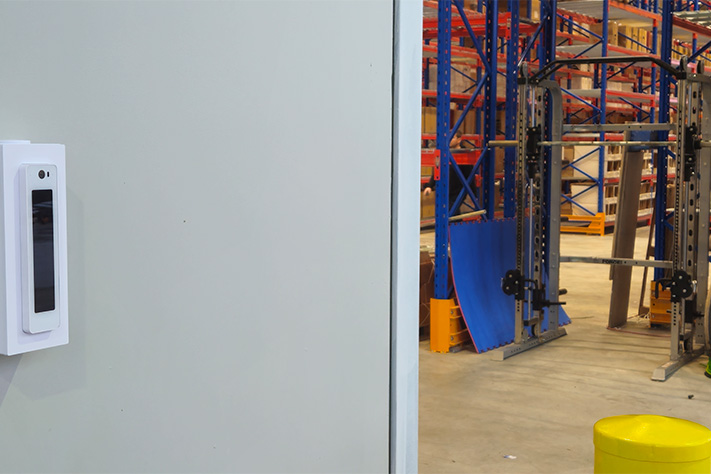
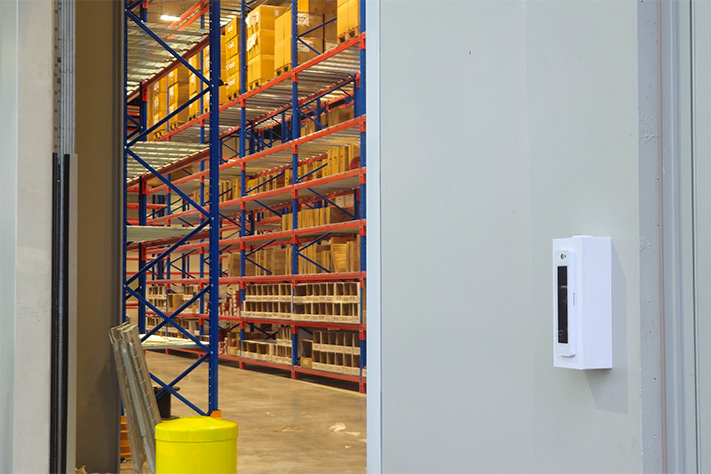
Access control: 36 doors and 4 gates, managed from one place. Every access point sits on a single Ubiquiti UniFi platform, managed across all sites from one screen. Manufacturing zones, R&D areas, staff corridors, and external gates run through one interface, and every entry and exit is logged as a compliance record without manual input from the operations team.
Alarm: EN 50131 Grade 3 hybrid. The Ajax hybrid system is specified to EN 50131 Grade 3 throughout: the Superior Hub Hybrid 4G controller, with its power supply and communication built in, and every connected device is Grade 3. The system is connected to the fire alarm and building management infrastructure, with full factory lighting automation. After hours it manages a coordinated shutdown of lighting, air conditioning, heating, and high-energy machinery. That cuts energy use every night, and it removes the quiet fire risk of plant left running in an empty building.
Built to double. Medifab has the land to double its footprint, and the installation was designed to match, with expansion modules already in place. When the facility grows, the security system grows with it. The first build is the foundation, not a sunk cost to be replaced.
Compliance documentation: off Medifab’s desk. Blue Eagle produced the PS3 producer statement and as-built drawings, worked alongside the fire engineer to document the access control correctly, and supported the final building inspection. Medifab’s team focused on getting operational. Blue Eagle handled the paperwork.
The advantage
Investigations cut from hours to minutes
Checking an event used to take about 2 hours. It now takes 20 to 30 minutes, across roughly 10 events a month. Footage is already classified by object type and colour, and every door and gate event sits on the same platform, so the question of who was where is answered from one screen instead of pieced together from several systems. The time comes back to the operations team every month.
Access managed once, reflected everywhere
Onboarding, revoking, and adjusting permissions happen through one interface and apply across every site simultaneously. The value compounds with every hire, departure, and role change across 6 locations in 4 countries.
Manufacturing and R&D protected at the door
Unauthorised access in a medical device plant carries two distinct consequences: a WorkSafe exposure and a competitive IP risk. Zone separation is enforced, every entry and exit is timestamped, and wrong-place, wrong-time situations are stopped before they become incidents. The value of the IP the system protects does not fit on a spreadsheet. The cost of an IP breach or a WorkSafe improvement notice does.
Intelligence from day one, more in reserve
The AI running at commissioning does the watching: intrusion and line-crossing detection, and classification of people and vehicles by object type and colour. Smoke and flame detection sits ready on the same cameras, an early warning that matters in a plant producing powered mobility equipment. Intelligence built in, not bolted on.
Capital planning that holds
The expansion modules installed during the build mean doubling the facility does not mean doubling the security investment from scratch. The next stage of growth is a planned step, not a new system from scratch.
The ongoing relationship
Medifab is on a structured maintenance and compliance programme covering every system Blue Eagle installed.
The CCTV and alarm systems are serviced annually: software and firmware updates, hardware health checks, and the maintenance that extends operational life beyond what a break-fix model delivers. The access control system runs on a scheduled parts replacement programme mapping hardware end-of-life across a 5 to 7 year horizon, so replacement is a planned line in the capital schedule, never an emergency.
BWoF obligations run on a 6-monthly cycle. Blue Eagle carries out the inspections, an IQP-registered partner certifies them, and Blue Eagle owns the calendar. Medifab does not track filing dates. When an inspection is due, it is handled.
The annual account review is not a service call. It is where the next conversation starts: new capacity requirements, updated compliance obligations, capability ready to activate, identified before they become urgent. That is how the system evolves with the business instead of ageing into a legacy liability.
“Blue Eagle’s work for Medifab was very professional, they recommended a great solution which met all our requirements successfully, were very responsive for the installation and did a great job with post-install support.”
Frederick Mascull, Chief Executive Officer, Medifab
Medifab needed a security environment designed around a medical manufacturing operation, not a standard commercial install adapted to fit. That distinction matters when the system is protecting IP, carrying WorkSafe obligations, and running live intelligence across a production facility. If your operation carries similar risk, the conversation starts with a site assessment.