
Warehousing, logistics, and distribution
Stock moves fast.
Investigations should too
When a consignment goes missing from a distribution site, the value of the goods is rarely the biggest number. The bigger one is the time it takes to find out what happened, and the customer relationship riding on the answer.
A distribution site has more people through it, more vehicles, and more handovers of responsibility than almost any other operation of its size. Drivers who work for someone else, agency staff on short rosters, third-party logistics operators, and stock that changes custody several times between the gate and the truck.
That combination breaks conventional site security in a specific way. Coverage exists but it is organised around the building rather than around the movement, so when a question arises the footage shows an overview of the yard rather than a specific stock transfer. Piecing together where a pallet actually went means working across cameras, timestamps, and someone's recollection of which loading dock was in use.
The second pattern is loss that never gets investigated because investigating costs more than the stock. Shrinkage gets written off, the pattern continues, and nobody knows whether the problem is opportunistic or organised.
What your obligations actually require
Health and Safety at Work Act duties
A yard with vehicles and pedestrians moving together is one of the higher-risk environments in commercial operations. Camera coverage of vehicle movements and pedestrian separation is both a safety control and the evidence that the control existed.
Chain of custody and customer requirements
For many operators the binding obligation is not statutory, it is contractual: a customer requiring evidence that goods were handled correctly, or an insurer requiring specified coverage and retention. Those requirements are enforceable and they are frequently written by people who have never seen your site.
Building warrant of fitness
Access control on fire doors, and the associated documentation, sits inside your BWoF with inspections on a schedule and annual sign-off.
Privacy Act
Cameras covering staff working areas carry notification and use obligations. Getting this right protects the footage's usefulness: material collected without the right basis is a problem when you need to rely on it.
Border and biosecurity controls
Depots next to airports and seaports often operate as a Customs Controlled Area or an MPI transitional facility. Both carry physical security and access requirements set by the regulator and checked on inspection. Where they apply, they are usually the strictest obligation on the site.

What Blue Eagle does differently
We design around the movement rather than the building. Where the handovers happen, where custody changes, which points every consignment has to pass through, and who is answerable. On a distribution site the useful question is not how much of the yard is covered, it is whether the coverage provides quality evidence of an incident, with the ability to reconstruct the sequence of events.
That comes out of a site survey before anything is specified, then the options worth considering, with the trade-offs stated. The method is called RADAR, and the first thing it produces is a written assessment you keep, whether or not you choose Blue Eagle.
How we look after systems after installation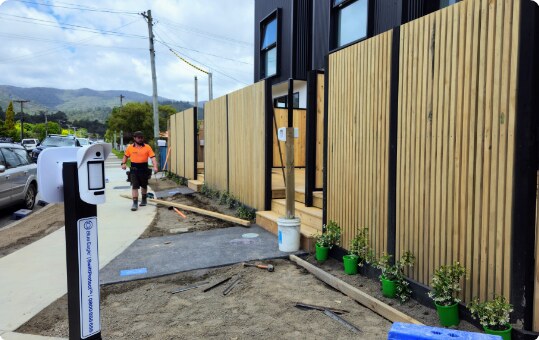
From 5 or 6 break-ins a month to roughly 1 every 2 months
Faisandier Group runs multiple development sites across the Wellington region, each holding high-value materials on an open site with people coming and going constantly. Before Blue Eagle, sites were being broken into 5 to 6 times a month. With SwiftProtect™ monitoring, AI-enabled cameras and portable perimeter detectors covering the full boundary rather than the entrance, break-ins fell by around 90%, and 90% of confirmed intrusions now end in an arrest.
A construction site is not a distribution centre. The pattern is the same: high-value goods, an open perimeter, and a loss that costs far more than the item taken.
Read the Faisandier Group case studyFind out what your current coverage could actually answer
Time on your site, then a written assessment: what your coverage would produce if you needed to reconstruct a movement tomorrow, and where the gaps are. Yours to keep, whether or not you choose Blue Eagle.