
Food storage and production
Your camera system is doing two jobs. Most are only built for one
On a food production or cold storage site, the security system secures the premises, evidences that the process ran without interference, shows who entered a hygiene zone and when, and flags missing PPE on the line while there is still time to act. Those are the jobs a general commercial install is not designed for.
Food production carries an assurance burden that most operations do not. It is not enough for the process to have run correctly; you have to be able to demonstrate that it did, to an auditor, a customer, or an export market, sometimes months after it happened.
That makes the camera system part of your quality evidence rather than an adjunct to it. And it changes what a good system looks like. Even coverage of floor area is the wrong specification. What matters is coverage of the stages where interference or contamination would carry the greatest consequence, at a resolution that answers a question rather than raising one, retained long enough to reach back as far as an audit can.
The failure mode we see most often is a site with plenty of cameras and no ability to use them. Several standalone recorders, none of them talking to each other, a system too hard to use for the people who need it, and footage retrieval that costs half a day. A system nobody can interrogate is a system nobody interrogates until something has already gone wrong.
What your obligations actually require
Your Risk Management Programme or Food Control Plan
Whether the requirement comes through an MPI-registered Risk Management Programme, a Food Control Plan, a customer standard such as a retailer's quality assurance scheme, or export market verification, the pattern is the same: you have to evidence process integrity on demand, and the evidence has to be retrievable within the timeframe the request allows.
Traceability and product withdrawal
If a batch is questioned, the value of camera coverage is how quickly it narrows the scope. Coverage that pins the question to a stage and a shift is the difference between withdrawing a single batch and withdrawing a week of production.
Restricted zone control
Zone separation between production, storage, and general areas, with an audit trail of who entered and when, is both a food safety control and a security one. The same system evidences both.
Building warrant of fitness and Form 12A
Access control on fire doors sits inside your BWoF, on a schedule with annual sign-off.
What Blue Eagle does differently
We specify against what you have to be able to prove, not against square metres. That means starting with the stages where an assurance question is most likely to land, then working outward, and it means asking how far back the questions reach before setting retention.
It comes from time on site while the line is running, and it produces a written assessment before any recommendation is made. The method is called RADAR. The assessment is yours to keep, whether or not you choose Blue Eagle.
How we look after systems after installation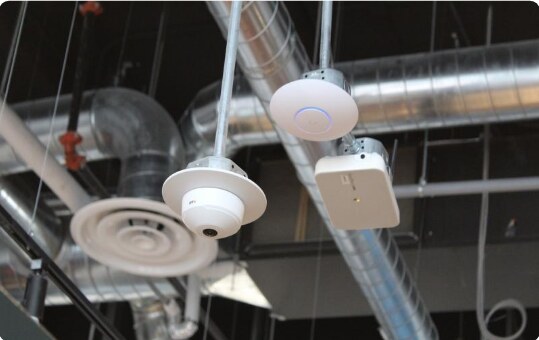
50 cameras, 3 sites, one platform
Farmland Foods is a nationwide food manufacturer and meat processor working under an MPI-registered Risk Management Programme. Its evidence sat across several standalone recorders that were hard to use, incomplete, and unable to evidence what that programme requires. Blue Eagle replaced them with 50 high-resolution cameras across 3 sites on a single platform, with remotely controlled zoom (PTZ) cameras positioned on the critical stages of the manufacturing process, live alerts and AI search ready to switch on, and a design built to scale efficiently to further sites.
Read the Farmland Foods case studyWould your current system survive an audit question?
Time on your site, then a written assessment: what your coverage evidences today, where it would not answer, and what your obligations actually require. Yours to keep, whether or not you choose Blue Eagle.